
Declutter 2026 Items in 2026: A Simpler Home, One Small Step at a Time
This post may contain affiliate links, which means I may receive compensation if you make a purchase using one of these links.
Feeling buried under baby gear, curriculum piles, or mystery junk drawers? This is your permission slip to start fresh. I’m sharing the simple challenge that helped me declutter over 6,800 items in three years, and how it radically changed our home, our homeschool days, and my mindset. Whether you love checklists or just need a gentle nudge to begin, I’ve got a system that makes massive progress feel totally doable.
It’s a brand new year with all that fresh start energy buzzing around us. Everywhere I look, moms are talking about their word for the year, their goals, their plans to finally get organized. There’s this collective desire to make this year different—to finally tackle the clutter, to create that peaceful home we all dream about.
And you know what? I love that energy. I love that hope.
But here’s what I’ve learned after nearly fifteen years of teaching decluttering: you need more than hope. You need a system.
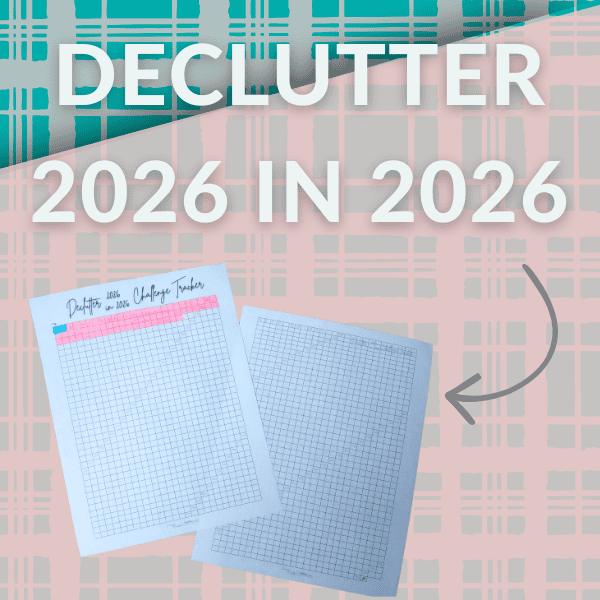
Today I’m sharing something that completely transformed my home over the past three years. It’s called the Declutter 2026 in 2026 Challenge, and I’m giving you a free tracker to go with it. But more importantly, I’m going to show you why this works when other decluttering attempts haven’t, and how you can actually complete it without burning out halfway through January.
Because here’s the truth—you don’t need more motivation. You need a plan that fits your real, messy, beautiful life.
Why This Challenge Actually Works (When Others Haven’t)
Okay, full disclosure time. I didn’t invent this challenge. I learned about it from another minimalist blogger back in 2023, and I used her tracker for the first three years. But this year, I finally made my own version—and I’m sharing it with you because this challenge has genuinely changed my life.
The concept is brilliantly simple: declutter the same number of items as the year. So in 2026, you declutter 2,026 items. That’s it. That’s the whole challenge.
Now, I know what you’re thinking. “Laura, that sounds completely overwhelming. I can barely keep up with laundry, and now you want me to get rid of over 2,000 things?”
But here’s where the magic happens. Let’s do the math together.
If you declutter an average of just six items per day, you’ll complete this challenge with 27 days off built in. Twenty-seven days for holidays, sick days, vacation, those weeks where life just completely falls apart.
And mama, I’ve been teaching decluttering five things a day for about ten years now. Five items a day equals 1,825 items per year. So we’re really only talking about one extra item per day. That’s it. That’s the difference between where you are now and massive transformation.
Getting Underneath Your Clutter Threshold
The goal behind this isn’t just to hit some arbitrary number. It’s to help us get underneath our clutter threshold.
Because here’s what most people don’t realize… if you’re not intentionally removing more than you’re bringing in, you’re just treading water. You’re never going to feel that lightness, that breathing room you’re craving.
After doing this challenge for three years, I finally hit maintenance mode in my home. I no longer have the clutter build-up that used to drive me crazy. And let me tell you my numbers, because they’re honestly kind of shocking:
- 2023: 2,818 items decluttered
- 2024: 2,024 items decluttered
- 2025: 2,025 items decluttered (plus a head start on 2026)
That’s over 6,800 items in three years. And our home feels completely different because of it.
My Year One Deep Dive: The Baby Stuff Avalanche
Let me take you back to 2023 when I first started this challenge. I had just had my son, and mama, we were drowning in stuff. We had accumulated so much during my pregnancy and those early baby months. Our house was jam-packed with baby gear, kid stuff, and—here’s the kicker—things I’d been holding onto for “someday.”
You know what I mean by someday stuff, right? The hobbies you were doing before kids came along. The clothes for your “ideal self.” The projects you fully intended to get back to once you had time.
Except time never came, because you had a baby, and life just kept moving faster.
We had an entire room that was just storage. Just packed with stuff. It was embarrassing. That room was right next to my office, and I literally did not go upstairs for like a year after my son was born. We just kept dumping things in there because we didn’t want all that chaos in our living space.
But in 2023, I jumped all in on this challenge because I knew we were so overwhelmed. And as I slowly started going through everything that year. It was crazy. I can’t even put it into words how much stuff left our house.
The Easy Stuff
The easiest things to let go of were items that were outgrown. It was simple to say, “Okay, we’re done with this bassinet, out it goes. Done with the teethers, done with this stage of clothes.” When you know you’re not using something again, the decision becomes straightforward.
Now, I know a lot of people feel emotional about getting rid of baby items. I get it. There were definitely some things I was attached to. And this is exactly why I’m a big believer in keepsake boxes.
Here’s my system: You keep a few very special emotional things in one keepsake bin. That’s it: one box, not ten boxes taking up half your garage. And I also kept one box for hospitality. So if my sister comes with her baby or a friend visits with their baby, I have one box of baby and toddler toys set aside.
But that’s it. Two boxes maximum: a keepsake bin and a hospitality bin. Everything else has to go.
And honestly, because there was so much stuff everywhere, I was excited to get it out of my house. I wanted my space back so badly. That motivation made it easier to let things go.
The Hard Stuff
The harder decluttering came when I was going through my childhood keepsakes, old hobby supplies, and business investments that never panned out. I had bins of fabric for potential sewing projects I was never going to start. I had business books I’d spent money on but never used. Those were definitely more difficult decisions.
But I had to look at each item and ask myself: What purpose is this serving? Is this helping me or harming me?
And when I realized that seeing these items on my shelf was causing me more anxiety and stress than benefit. Even though they cost money, even though I thought I might use them someday, I knew they had to go. They were causing emotional and mental harm just by sitting there, reminding me of what I wasn’t doing.
That’s the mindset shift that has to happen, mama. When the weight of keeping something outweighs any potential future benefit, it’s time to let it go.
The Power of Progress: Why Tracking Changes Everything
Now, I want to talk about tracking, because this was genuinely one of the most motivating parts of the challenge for me.
We created a color-coding system in our house. Each person had their own color, and I used highlighters to mark items on my tracker. If it was baby stuff, I’d mark it for my son. My stuff got my color. My daughter got hers. My husband got his.
And we kind of made it into a game. Really, the only people actively playing were me and my daughter. And we’ve done this all three years: who’s going to declutter more things?
Usually it was me. But I have to be honest, in 2025, my daughter won. She got rid of more things than I did. And she was so excited because she’s very competitive.
That competitive element was actually a huge motivator for her to declutter her own things. She wanted to win, and she wanted to get rid of more things than me. So if you have a competitive kid, get them in on it. Give them their color, let them mark their boxes. You might be completely shocked at how much stuff they declutter when they feel ownership over the process.
But Tracking Isn’t for Everyone
Now, let me be clear, tracking is not for everybody. I know some people find counting every single item incredibly stressful. If you have to focus on each thing multiple times, touch it, count it, mark it down, and that process drains you, then don’t use a tracker.
Just don’t count the items. Get rid of stuff as much as you can without the pressure of tracking.
But if you’re like me and you love checking boxes and seeing visual progress? This tracker is going to be incredibly motivating. There’s something powerful about being able to say, “Oh my gosh, I got rid of 2,025 things this year. That’s crazy.”
I also know other people who prefer to count boxes instead of items. Like, “I filled up 20 boxes this year. Awesome!” I did a 100-box challenge a couple years ago, and that was really cool too.
There are so many different ways you can do this. The point is to find what works for you. Don’t let the method stress you out. But if visual progress motivates you, this tracker is going to keep you moving forward all year long.
“But I Don’t Have 2,026 Items to Declutter!”
I’ve had a couple of people say to me, “Oh my goodness, I cannot possibly have 2,026 items in my home to get rid of this year.”
Okay, mama. Let me challenge you for a minute.
The average American home has over 300,000 items in it. Three hundred thousand items. That’s crazy, right?
Even if your home only had 100,000 items, maybe you live in a small home or an apartment, you can find 2,000 items to declutter. I guarantee it.
Let’s just walk through your house together for a second:
- Your clothes, towels, shoes, jackets
- Your junk drawer
- Your files
- Tupperware containers and food storage
- Your bedding drawers
- Pet supplies
- Your kids’ outgrown or broken toys
- Paper
- Art supplies
- Homeschool curriculum you’re not using anymore
- Office drawers
- Bathroom drawers
- Storage closets, attics, basements, garages
- Your car
Trust me, you can find 2,000 items.
Where to Start When You’re Overwhelmed
If you’re sitting there feeling completely overwhelmed thinking, “How am I even going to find stuff? Where do I begin?” Start simple.
Start with one bathroom drawer. Old toothbrushes, expired toothpaste, hair accessories you never wear, jewelry that’s been tangled up for two years. You’ll be able to see very quickly what you use and what you don’t.
I sit down with my daughter all the time and pull out her little bathroom drawer. “Okay, when was the last time you wore this bracelet? When was the last time you used this headband? Do you still want this?”
Sometimes she says yes, sometimes she says no. But here’s the key, especially with kids, or with a spouse who has ADHD, or even yourself if you’re easily overwhelmed: don’t look at the whole drawer. Just look at one item.
Tell me how you feel about this one item.
Yes, it goes slower. But you will see progress. You will see the “I don’t want it” pile growing. It just takes a little more time, and that’s totally okay.
Set aside five-, ten-, or fifteen-minute chunks of time every day or a couple times a week. Work on this consistently.
And here’s what I promise you: when you work on this consistently with your kids, they will start getting it. They will start looking around their room and saying, “Hey, I don’t want this anymore.” They will start valuing clear, clean spaces. They will start decluttering on their own.
It will not happen overnight. But it will happen.
The Sustainable Pace: How to Actually Finish
Like I said earlier, I highly recommend you challenge yourself to five to six items a day. If you average six items a day, you’ll finish the challenge and still have 27 days off in the year.
Some days you’re obviously going to find more. Some days you might declutter 30 things from one drawer. And some days you might get rid of one thing or nothing at all. And that’s okay. It doesn’t have to be every single day.
But the more consistent you are with just a couple things a day, the less likely you are to burn out. And you will still see immense progress over time.
The Deep Dive Strategy
Here’s what I would really encourage: Go for those five to six items most days. But then once or twice a month, go a little bit deeper. Give yourself an hour to tackle a bigger space: a closet, a storage bin, your office.
Those deep dives are where you’ll get rid of more items all at once, which makes up for the days you maybe don’t have time or energy. And it gives you that momentum to stay ahead: maybe even finish your challenge early.
But keeping it in bite-sized chunks with consistency over time means you’re not going to burn out. You’re not going to give up halfway through because you’re seeing that crazy momentum building and building and building.
The Transformation That Changed Everything
Let me tell you about one specific project from 2024 that really gave us huge momentum and showed me what this challenge could actually create.
We cleaned out our storage room, that disaster room I told you about, and we made it into a homeschool room/playroom.
We got rid of I don’t even know how many things. So many things. But we took a completely unusable space that was worthless, just storing junk, and made it into a little haven where we could sit and do school and play.
This changed the atmosphere of our homeschool days. It created so much more peace. The kids were happy. Their toys had a place. Their school books had a place. It changed the whole flow of our days.
And had I not done that deep dive, had I just said, “Well, this is the storage room, this is just where all the crap goes”, our family wouldn’t have that space. We would still be struggling at the kitchen table. And homeschooling would not be going smoothly, I can tell you that.
So if your space is cluttered, if your homeschool area or table or wherever you do school is unusable because of clutter, you have to push yourself to go deep. Tell yourself: This matters. This matters so much.
I need to get rid of a ton of stuff so that we can make this space usable. So that we can make this space special and workable for our family.
Because that’s what’s important—that our homeschool days flow smoothly. That our stuff has a place. That we can find our things. That we’re not constantly losing things or failing to take care of the things that matter most.
The things that matter most need space to breathe.
Final Thoughts: One Simple Step at a Time
Mama, if you’re feeling that pull to make this year different, to finally tackle the clutter that’s been weighing you down, this is your invitation to start.
You don’t have to be perfect. You don’t have to declutter 20 items every single day. You just have to start. Five items. Six items. One drawer at a time.
The Declutter 2026 in 2026 Challenge isn’t about perfection. It’s about momentum. It’s about proving to yourself that you can make massive progress when you make it intentional.
And listen, after three years of doing this, I can tell you that our home feels completely different. Not because it’s Pinterest-perfect. Not because we’re minimalists. But because we’ve created breathing room. We’ve made space for what matters. And our homeschool days are calmer, smoother, and more joyful because of it.
That’s what I want for you. A home that supports your family instead of stressing you out. Homeschool days that flow instead of feeling like constant chaos. And the confidence that comes from knowing you have systems that actually stick.
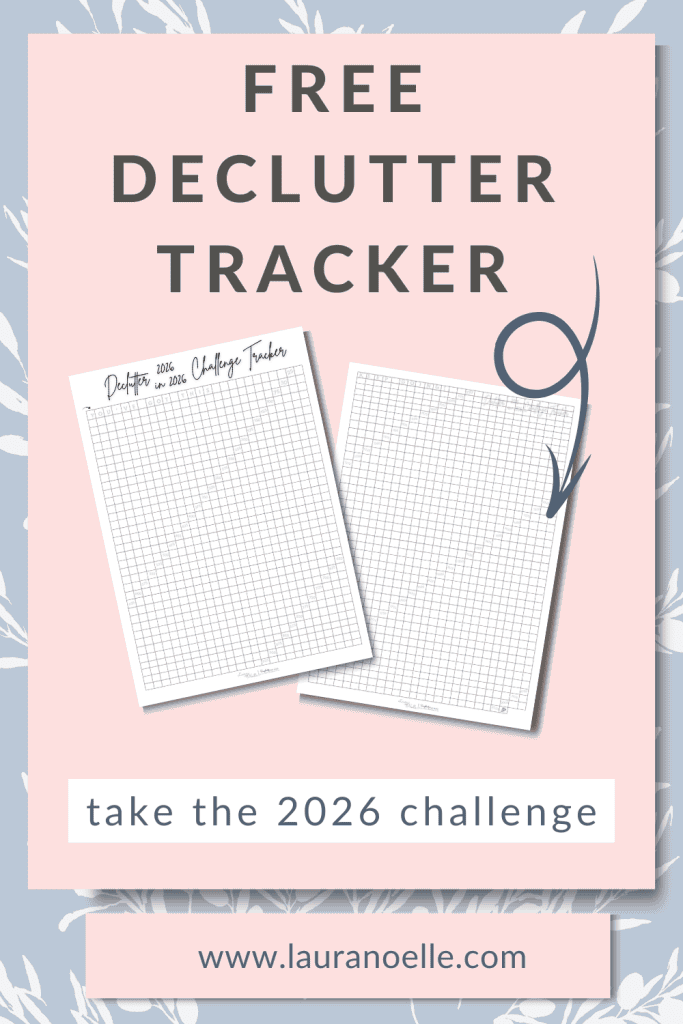
Ready to transform your home this year? Grab your free Declutter 2026 in 2026 Challenge Tracker. It’s a simple black-and-white PDF—super easy to print at home. Just two pages with boxes to check off, some motivational words, and every 25 items marked so you can easily keep track of where you are and how far you still need to go.
Print it. Stick it on your fridge or in your command center. And start making progress today.
You simply mark off a box for each item you decide to declutter. That’s it. No complicated system. No pressure. Just one simple step at a time.
And mama? I can’t wait to hear how this transforms your home this year. Tag me on Instagram when you get started. Let’s do this together.
One simple step at a time, we’re building a better homeschool.



One Comment