How to Homeschool Without Losing Your Mind
This post may contain affiliate links, which means I may receive compensation if you make a purchase using one of these links.
If you’ve ever felt like your home and your homeschool are constantly fighting for your attention, pulling you in two directions at once, you’re not imagining it. Today, I’m showing you why nothing has stuck yet, and the one tiny shift that can bring calm to your chaos starting tomorrow morning.
The Question Every Homeschool Mom Asks
“How do I keep the house clean AND get school done?”
“Why does everything fall apart by lunchtime?”
“Am I the only one who feels like I’m failing at both?”
Mama, if you’ve asked yourself any of these questions, you’re not alone. And here’s what almost no one is talking about: the reason you feel like you’re failing is because your home and your homeschool are tangled together…and you’ve been trying to fix them separately.
See, no one tells you this when you start homeschooling. Your lesson plans don’t work in a cluttered house. Your cleaning systems fall apart when homeschool runs wild. These two things? They’re not separate problems. They’re one ecosystem pulling on each other all day long.
So let’s unpack why that matters, what it’s been costing you, and, most importantly, the simplest place to start untangling it. No overwhelm. No big overhaul. Just one small shift you can make tomorrow that touches both your home and your homeschool at the same time.
The Cycle You Know Too Well
A few years ago, I felt like I was losing my mind.
Every single day felt like a choice between two fires. Do I clean the house and feel guilty that school didn’t happen? Or do I dive into homeschool and ignore the disaster piling up around me?
It was always this tug-of-war. If I spent the morning cleaning and organizing, half my day would be gone. And by the time I was “ready” to homeschool? I was already exhausted. And guess what? So were the kids. Nobody wanted to do anything.
But if we jumped into lessons first and went all in on the homeschool plan, we’d finish drained and grumpy. And the mess we ignored? Still there. Still overwhelming. Still waiting for me at 4:00 p.m. like, “Hey, remember me?”
Or maybe it’s Saturday. You spend your entire day cleaning, trying to reset the house. Then it’s five o’clock, the kids are hungry, and you’re too wiped out to make dinner… so you order pizza again. And it just feels like…is this really the only way?
But Mama, that cycle? That’s not your fault.
It’s not because you’re lazy or unmotivated or somehow “not cut out” for this.
It’s because your home and homeschool are deeply connected. They can’t be run separately. They’re one ecosystem. One rhythm. One system.
If we try to give 90% to home and 10% to homeschool, or vice versa, everything feels off-balance. But when we build tiny, reliable rhythms that support both at the same time? Everything shifts.
Your perfect homeschool plan doesn’t work in a cluttered, chaotic house. And your house doesn’t get clean and calm with a randomized, fly-by-the-seat-of-your-pants homeschool. They cannot co-exist like that.
Why Fixing One Side Never Works
Here’s what I see all the time. A mom declutters her homeschool shelves. Organizes all the curriculum. Labels the bins. Feels great about her homeschool space… but then looks at her home.
The laundry has piled up. The kitchen’s trashed. The living room looks like a toy bomb exploded. And she feels like a failure.
Or she creates the perfect chore chart. Gets the house running smoothly. Everyone’s doing their part. But homeschool? Total chaos. No one can find a pencil. The lesson plans are scattered. The kids are fighting. And she’s thinking, “Why can’t I get both of these things to work at the same time?”
Very simply? Because you’ve been trying to solve a tangled problem with isolated solutions.
New cleaning systems. New chore charts. New planners. New curriculum. None of it sticks because you’re treating symptoms, not the root.
The root is this: Home + homeschool are one connected ecosystem. You cannot stabilize one without anchoring both.
This is why you feel like you’re losing your mind. This is why nothing has worked long-term…yet.
Think about it this way: if you spent all your energy organizing your homeschool curriculum but left the kitchen sink overflowing with dishes, what happens when lunchtime hits? You’re standing in chaos trying to figure out what to feed your kids while they’re asking you math questions and the baby’s crying. The organized curriculum doesn’t help you in that moment.
Or flip it. You meal prep for the week, get the laundry caught up, and the house feels calm. But you have no idea what lessons you’re teaching tomorrow, where the math workbook is, or how you’re going to juggle teaching your elementary student while keeping your toddler entertained. The clean kitchen doesn’t solve that problem.
You need both working together.
Our brains can only handle so much decision-making before we hit overwhelm. When your home is chaotic, you’re spending mental energy just navigating the mess. Finding supplies, clearing spaces, managing interruptions. That’s decision fatigue before school even starts.
And when your homeschool has no structure? Same thing. You’re deciding on the fly what to teach, where to teach it, how to keep everyone engaged. More decisions. More exhaustion.
But when you have a simple rhythm that supports both? Your brain gets a break. Your kids know what to expect. And suddenly, the day doesn’t feel like a constant battle.
The Good News: It Doesn’t Require an Overhaul
Here’s the good news, mama. Untangling this doesn’t require a full overhaul. It doesn’t mean you have to redo your entire house or start homeschool from scratch.
It starts with one tiny shift that changes the entire foundation.
This shift has given our family a solid place to start EVERY day. A consistency and a flow that we never had before. And I use it to combine our home and homeschool into a gentle rhythm that guides me and my kids into a calmer day.
That tiny shift is what I call a Morning Anchor.
Now, you’ve probably heard of routines, schedules, and rhythms. But an anchor is something different.
What Makes a Morning Anchor Different
An anchor is:
- Predictable – Your kids (and you) know exactly what comes next
- Calming – It reduces chaos instead of adding to it
- Simple – It’s not a 47-step morning routine; it’s 2-3 essential actions
- Dual-purpose – It supports both home + homeschool at the same time
When you anchor your morning, you automatically stabilize the environment and reduce decision fatigue. Once your kids know the rhythm, they don’t have to ask you first thing in the morning what to do, or if they can watch TV, or if they should get dressed first. They KNOW what the flow of the morning looks like already.
And you? You’re not scrambling. You’re not making 47 decisions before 9 a.m. You’re following a rhythm that already works.
Why Morning Anchors Work (Even If You’re Not a Morning Person)
Let me bust a myth real quick: You don’t have to be a morning person for this to work.
A Morning Anchor isn’t about waking up at 5 a.m. to journal and exercise while your house is silent. (If that’s you, great. But that’s not everyone.)
A Morning Anchor is about creating a predictable start to your day—whether that’s 7 a.m. or 9 a.m.—that sets up both your home and your homeschool for success.
For example, our base Morning Anchor looks like this:
- Wake up and get dressed
- Devotions at the breakfast table
- Quick clean up, then move into morning lessons
That’s it. Three simple steps. But those three steps touch both our home (we’re not leaving breakfast dishes for later) and our homeschool (we’re starting lessons with a clear space and calm energy).
The specifics don’t matter as much as the consistency. When your kids know what comes next, the morning stops feeling like a battle. When you know your first three steps, you stop spinning your wheels trying to figure out where to start.
What Happens When You Don’t Have an Anchor
Without a Morning Anchor, here’s what happens:
You wake up already behind. The kids are asking for breakfast, asking what’s for school, asking if they can watch TV. You haven’t even had coffee yet, and you’re making decisions.
Someone can’t find their shoes. Someone else is complaining about what’s for breakfast. The toddler dumped out the toy bin. And you’re thinking, “We haven’t even started school yet and I’m already exhausted.”
By mid-morning, you’re frustrated. The kids are frustrated. And that sense of “I’m failing at this” creeps in before lunchtime.
That’s not a discipline problem. That’s not a motivation problem. That’s a systems problem.
When you don’t have a predictable start, everyone, kids and mom, spends the morning in reactive mode. You’re putting out fires instead of moving forward with intention.
But when you have a Morning Anchor? The fires don’t start. Because everyone knows the plan.
The One Thing You Can Do Tomorrow
Now, I’m not going to walk you through exactly how to build your complete Morning Anchor right now—because honestly, I want you to have something you can reference, something you can come back to, something tangible.
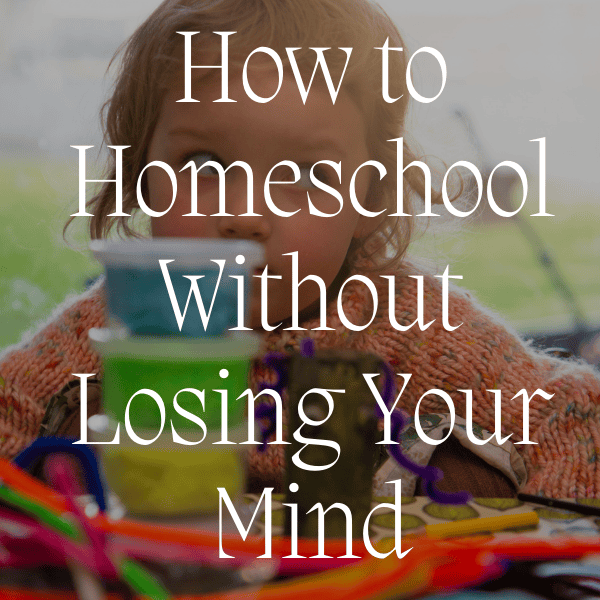
That’s exactly why I created a free guide for you called “How to Homeschool Without Losing Your Mind.”
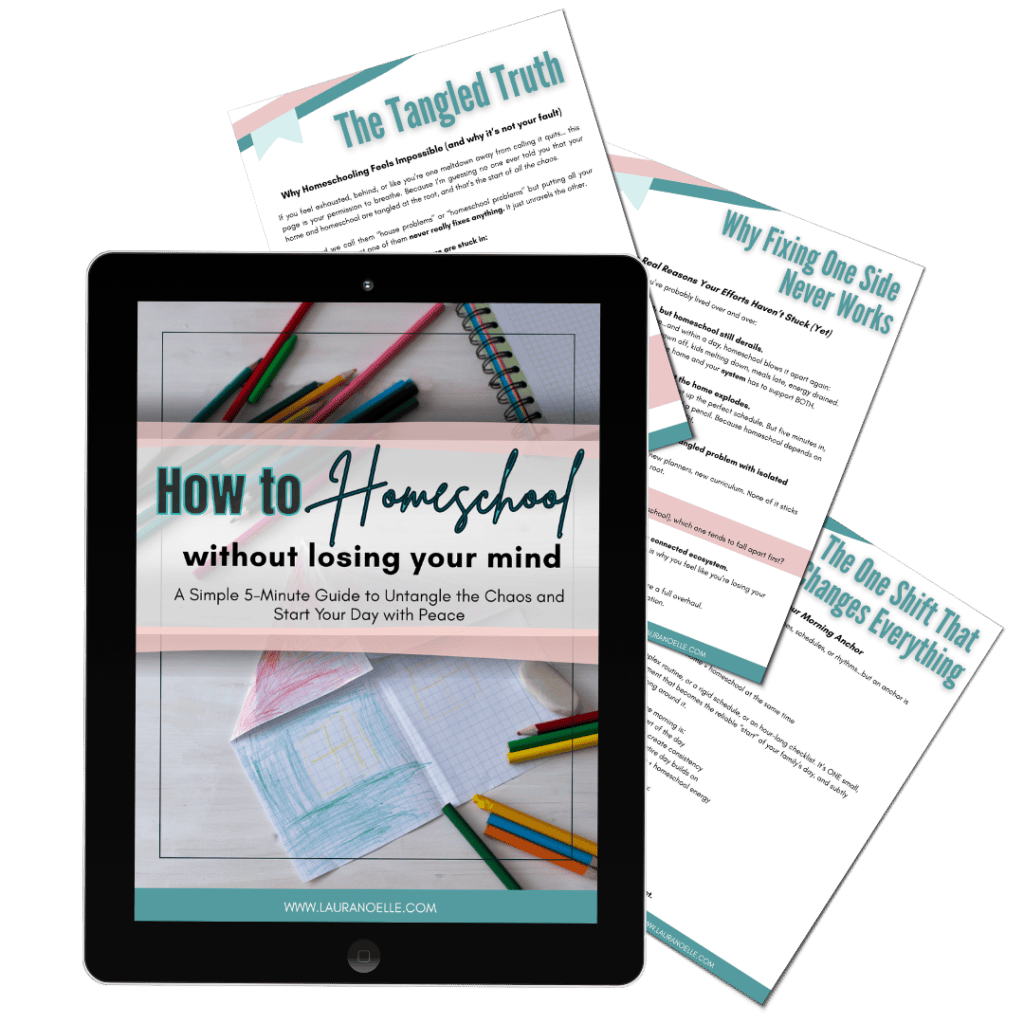
It’s not a checklist or a planner or a new system to make you feel behind.
It’s a simple 5-minute breath of fresh air. It’s something you can do tomorrow morning to stop the tug-of-war and start creating calm from the very first moment of the day.
Inside the guide, I walk you through the one tiny rhythm I start with when coaching overwhelmed homeschool moms, because it touches both the home and the homeschool in a single, simple step.
And no, you don’t need to overhaul anything. You don’t even need to be a morning person.
This one shift helps reduce the decision fatigue, the emotional outbursts, the constant sense of “I’m already behind” and it does it without you having to fix everything first.
So if your days feel chaotic, this guide will give you a clear and calming place to start.
You can download “How to Homeschool Without Losing Your Mind” here, and take your first step toward a day that actually flows.
Final Thoughts: You’re Not the Problem
Mama, I know how heavy this all feels. I know the weight of trying to be everything to everyone: teacher, mom, housekeeper, chef, cheerleader.
But here’s what I want you to hear today: You’re not the problem. You’ve just never had a system that actually works for both sides.
The real issue isn’t effort. It’s not motivation. It’s that you’ve been trying to run two massive roles with zero systems to support both.
And that changes today.
So go grab the guide. Start with your Morning Anchor. And watch what happens when you stop fighting yourself and start building something that actually sticks.
Your homeschool deserves more peace, and so do you.
Ready to finally breathe again? Download the free guide and create your Morning Anchor tomorrow.